
Whether you want to believe it or not, leads are the lifeblood of any photography business. Without fresh new leads coming into the business, you don’t have a business, you have a hobby. This is where I see almost every photographer miss the mark. Yes, referrals are great. Developing your Instagram channel. Wonderful. However, this is not a plan. Those of you embarking on that strategy are building your business on hope and prayers. Your business is dependent on others to refer you. Your business is dependent on the next Instagram algorithm update.
If you want to grow your business and have consistency in your revenue, then you need an actual plan to generate new leads every single day, week and month your business exists. This is the only way to build a predictable and consistent income. Consistency is the key. Below, I break down a winning strategy and explain the different ways to generate leads for your photography business.
What Is Lead Generation for Photographers?

Leads are how you build your business and control your destiny. A business that consistently generates new leads will never go hungry. And you will see a pattern emerge for your business. Meaning, for every 100 leads you generate you will win 10-15 new photoshoots. Now, every business, every region, every genre is going to see different results, but the point still remains. You are looking to generate a consistent stream of leads each and every month to ensure you have revenue coming in every month.
This can be done in a multitude of ways. We will discuss them more below. Obviously, Meta, Google, YouTube and others currently have a stranglehold on digital lead generation. And that’s great news for us. This gives us a platform where we can reach potential customers and let them know all about our business.
The Difference Between Leads and Inquiries
This is a tricky one to wrap your mind around. Someone poking around the internet, stumbling across your website and filling out your form asking for more information – to me that’s more of an inquiry. They have probably done this at 5 other photographers’ websites. There is absolutely no connection between your brand and them. In fact, after an hour, they will probably forget who they even asked for more information.
Now, a lead, on the other hand, is a little bit more qualified. Depending on the advertising medium you used to find them, they have likely become more familiar with your brand and contacting you was a little bit more intentional. Meaning, they saw one of your ads, found it interesting enough to click on it, and then submitted the form for more information.
I would rather have 10 leads than 20 “inquiries.”
Why Social Media Alone Isn’t a Strategy
Social media has changed dramatically over the last 10 years. It used to be you could build your following and audience and you knew when you made a post it would reach your followers. Now, it’s well documented that less than 2% of your audience will see one of your posts. So, what’s the point of building an audience if I can reach 100x more people via paid marketing on the same platform, with no followers whatsoever?
Recently, I put this to the test. I created a new TikTok account and I had less than 500 followers. I posted a video and put $10 per day behind it for a week. It was seen over 40,000 times. This is the way these platforms work today. There is no debate here. They are in business to make money.
So, sure, post away and make content that people love, but if it’s not generating new leads, then who cares? Do you want to stroke your ego, or do you want to make money?
Social media is wonderful, but never forget you are at the mercy of their algorithms.
The 3 Components of a Lead Generation System
Traffic.
You will need a consistent way of generating traffic to your site and your lead forms. This can be Google Ads, or Meta Ads or other non-digital ways. I’ve used and seen direct mail, TV ads, and other more traditional means work. The point here is testing and developing out a consistent way of driving traffic to your site.
Conversion.
Now, once the traffic gets to your site, what are we doing with it? We need a clean way to convert them into a lead. This requires that they fill out a lead form on your site. This comes down to the offer. Why should they give you their information? Just “because?” In today’s world, that’s just not a good enough reason. So make sure we have thought through some compelling way to get them to convert. This could be a lead magnet (a downloadable PDF with valuable information) or a special offer you are running. Get creative here.
Follow-Up.
This one blows my mind. The amount of photographers that will generate leads into their business and let days upon days go by without following up is mind boggling. Leads are perishable items. If you don’t respond – and respond QUICKLY – your potential clients will be turned off and look somewhere else for their photography needs.
The Best Lead Generation Strategies for Photographers
1. Facebook and Instagram Ads
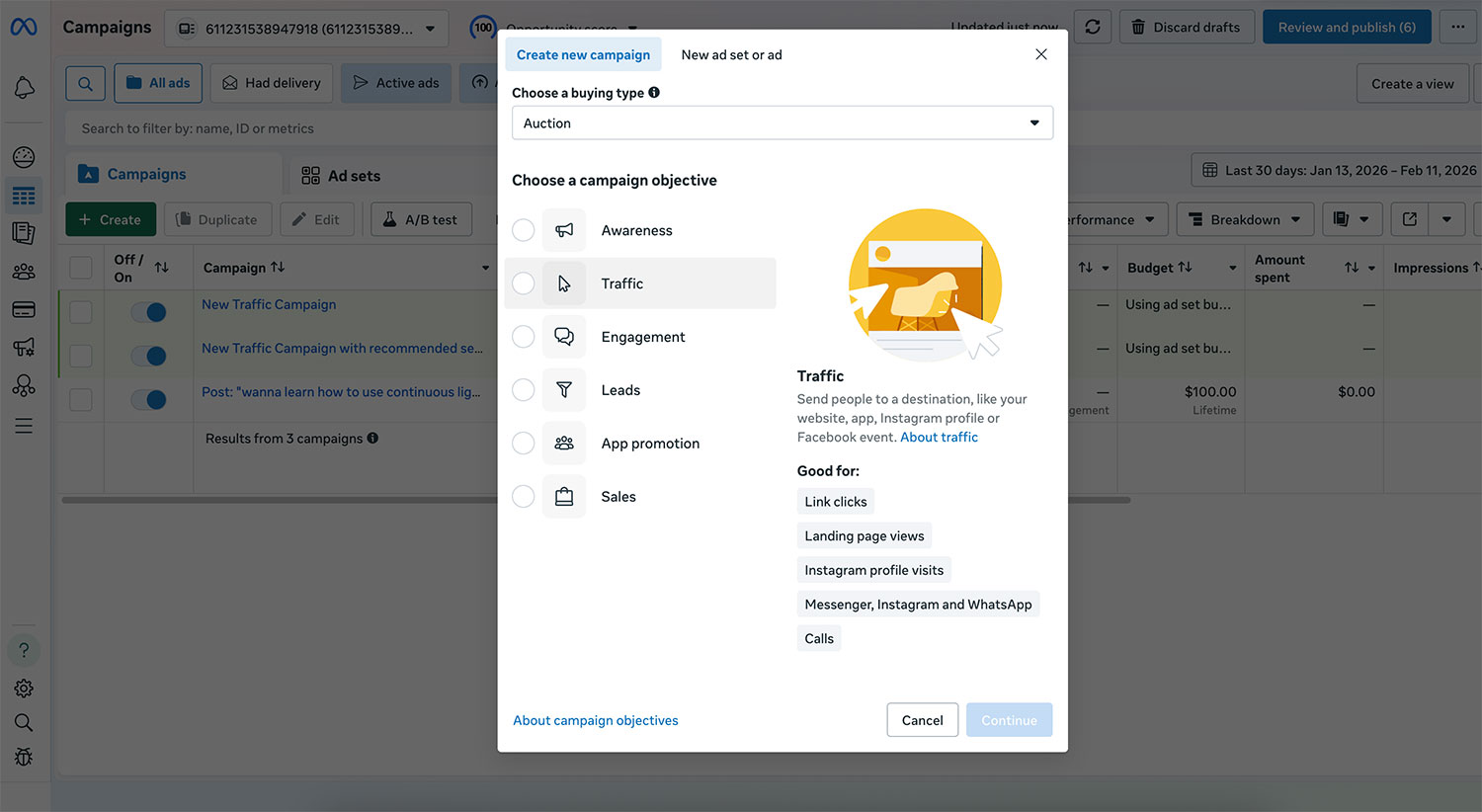
For me, Meta Ads are the quickest and easiest way to generate new leads into the business. You can target people by all sorts of demographic data including interests. So for example, if you wanted to identify people who like certain things, are a certain age, live in a certain part of the country – that’s all part of setting up your ads correctly on these platforms.
Now this is pretty standard for most advertising platforms, but what makes this so appealing is that you can target these consumers before they even know they need or want your services. Again, a perfect example of this would be a newly engaged couple. What’s the first thing they do on Facebook? They change their status to “engaged.” You can then create an ad campaign to target anyone with a status of “engaged” near you and start serving them ads for your wedding photography business. Thus, allowing you present your business to new clients before they have even begun searching. This is an incredibly powerful form of marketing.
2. Google Search Ads
I’m a huge believer in Google Ads, but it’s about understanding when the right time and place for these ads are. With Meta advertising, you are creating demand before your potential customer has really had a chance to do any research. They don’t really know about you or your services. However, with Google Ads, your customer is actively searching for your product or service. Now, the argument can correctly be made that this shows a higher purchase intent. Meaning, your customers are closer to the decision making phase, since they are actively searching.
While this assessment is correct, it also introduces a larger problem. Since your customers are searching for solutions, you are not in control of messaging. They are looking at multiple photographers with multiple offerings and pricing. So, you are at the mercy of responding to a customer that has already had their vision shaped by another competitor.
The key difference between Meta and Google advertising is timing in the customer journey. In one, you are creating a need they didn’t know they had. In the other, you are responding to a demand they have already identified.
Both are critical to success.
3. SEO and Organic Traffic
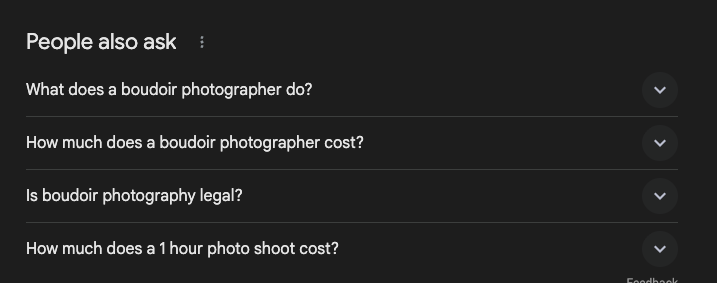
This is low-hanging fruit in my mind. In understanding your customers, you surely understand that their search is not always as simple as “city genre photographer.” People search for all sorts of related items. For example, if you are a boudoir photographer, you might notice that people search for things like, “What is boudoir photography?” If you are a wedding photographer, your customers may be searching for things like, “How much should a wedding photographer cost?”
This can be free traffic to your website, if you create content pages that are solely focused on answering these questions. Not only can it be free traffic, but it starts to position your business as an expert in these topics, which will generate more leads without spending any money on traditional advertising.
4. Referral Systems
Give your clients a reason to refer you. Sure, we all love the organic goodwill from our previous customers who do nothing but rave about us, but can you really build a business that way? I say no. It’s not predictable nor consistent.
Instead, build out an actual referral program where people can get credit for every person they refer to you. For example, one thing we have done over the years is give clients that refer us a free 16×24 canvas from one of their shoots for every booked (and this is key – no booking, no credit) referral. Cost? Roughly $100 from any professional lab.
Is it worth it? You tell me. If I said to you, give me $100 and I will give you a client who will pay your session fee and is almost guaranteed to spend money with you, would you do it? You better start lining up those $100 bills!
There are so many tools on the market to help you automate something like this, but honestly, it can just be a very manual and personal process. We used to design 5×7 flyers that we would put into customers’ print orders and they would say something like… “Loved your experience? Help us spread the word and get a free 16×24 canvas,” etc.
5. Lead Magnets and Giveaways
When it comes to promoting your business and collecting new leads, we have to get a little creative sometimes. Not everyone is willing to hand over their email or phone number without a really compelling reason. Lead magnets and giveaways are a way to sweeten the pot.
For example, an “enter to win a free photoshoot & free print” campaign is HUGE for us, and it works! Sure, you are going to get some people who don’t buy anything, and that’s ok. The vast majority of people who receive a free session and free 11×14 print are going to want more. Is it worth enticing people with something free in order to generate new leads and net new business during a slow season? Again, I say yes.
In addition, you can offer PDF downloads that are loaded with valuable information for free. They give you their name and contact info, you email them the information, but now you have new leads that you know are interested in the product or service you are offering. You would then add them to an email sequence that sends targeted and pointed emails about working with you, the uniqueness of your services, etc.
These are great additional ways of growing your leads and revenue streams.
6. Retargeting Campaigns
Every business owner should have this turned on without question. For a minimal spend, about $5 per day, you can retarget on Facebook and Instagram anyone who has visited your website or any specific page on your site. There is no reason for you not to do this. These people have expressed an interest in your services, so give them a little nudge and reminder to book a call or check out a limited time offer you are running.
How to Build a Lead Generation Funnel for Your Photography Business
Building a lead funnel requires some planning to ensure that the offer you are putting together is compelling and worthy of not only a click, but worthy of someone giving you their information. That’s the ultimate goal here. It has to be a win/win situation for all involved.
Step 1 – Define Your Ideal Client
Step 2 – Create a Compelling Offer
Once you understand a little more about your target demographic, you are in a better place to understand topics that might be compelling to them. This is usually tied to some sort of problem your ideal client might have or questions they might have where you can add a level of expertise.
You are the expert and you can really establish trust with your clients when you put together information that helps them solve a real problem.
Now, keep in mind, in my opinion this should not be fluff. Give them all the information they need. I know a lot of people fear that if you give too much information then they wont see the need to hire you because they can do it themselves. While that may be true for certain people, I need you to realize something: most people will not have the time nor the energy to do it.
Step 3 – Build a Landing Page

The landing page, also known as a squeeze page, is where the conversion will typically happen. If you are offering a free download or something like that, this will be the page they land on that provides more information about the offer. You should provide a full explanation of what they can expect when they sign up and I would highly consider putting a video on this page. This really personalizes things, creates connection, and deals with the reality of people not reading anything more than two sentences.
Step 4 – Capture Contact Information
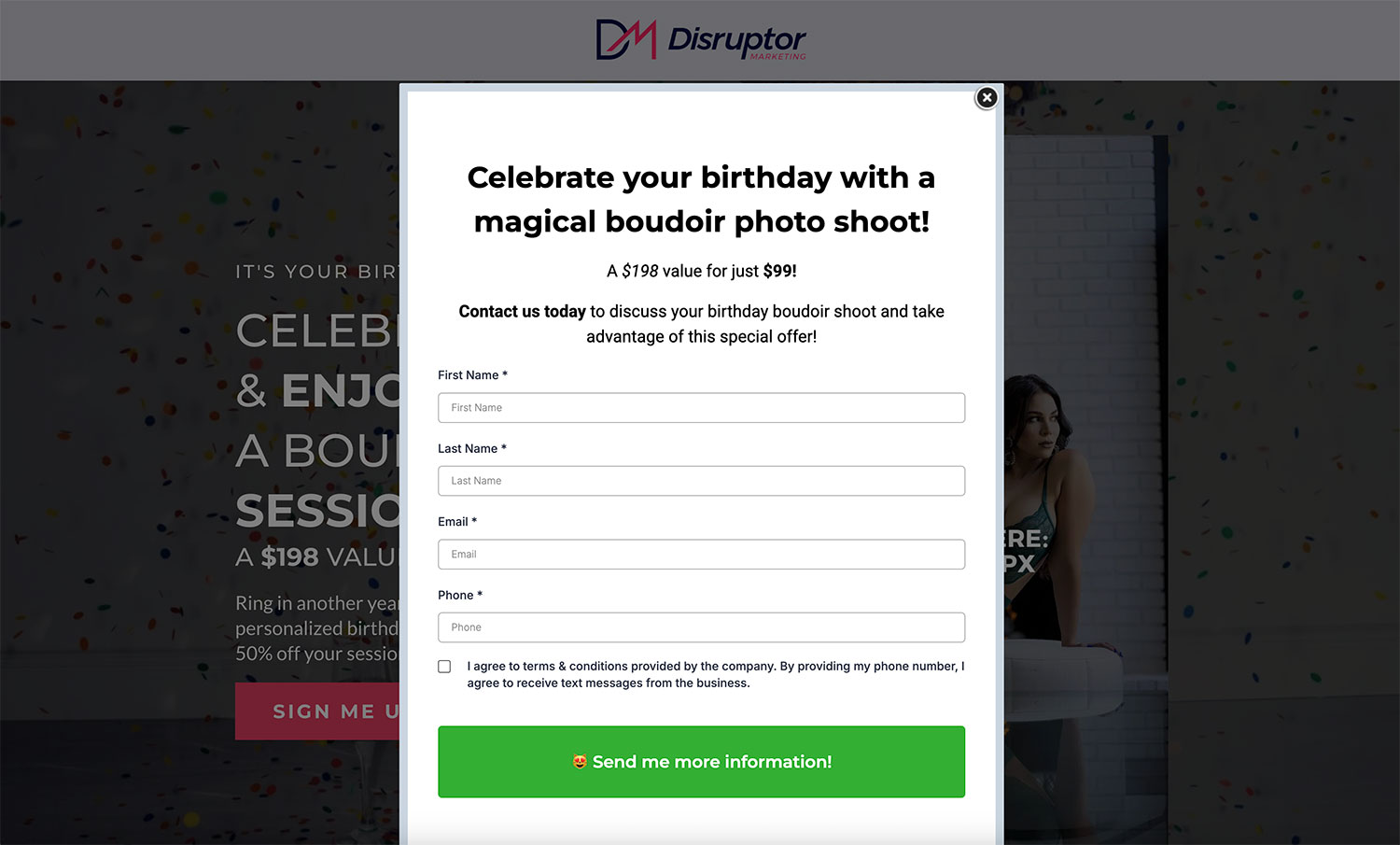
Keep this step simple. The more details you try to capture, the higher probability of someone moving on. The rule of thumb is to ask for name and email at a minimum. Add phone if you are using text marketing. And maybe one or two more fields that might be relevant to your business. However, there is data showing that every additional field you add shows a 30% drop off in form completion. That can add up fast to a lot of lost leads.
Step 5 – Automate Follow-Up
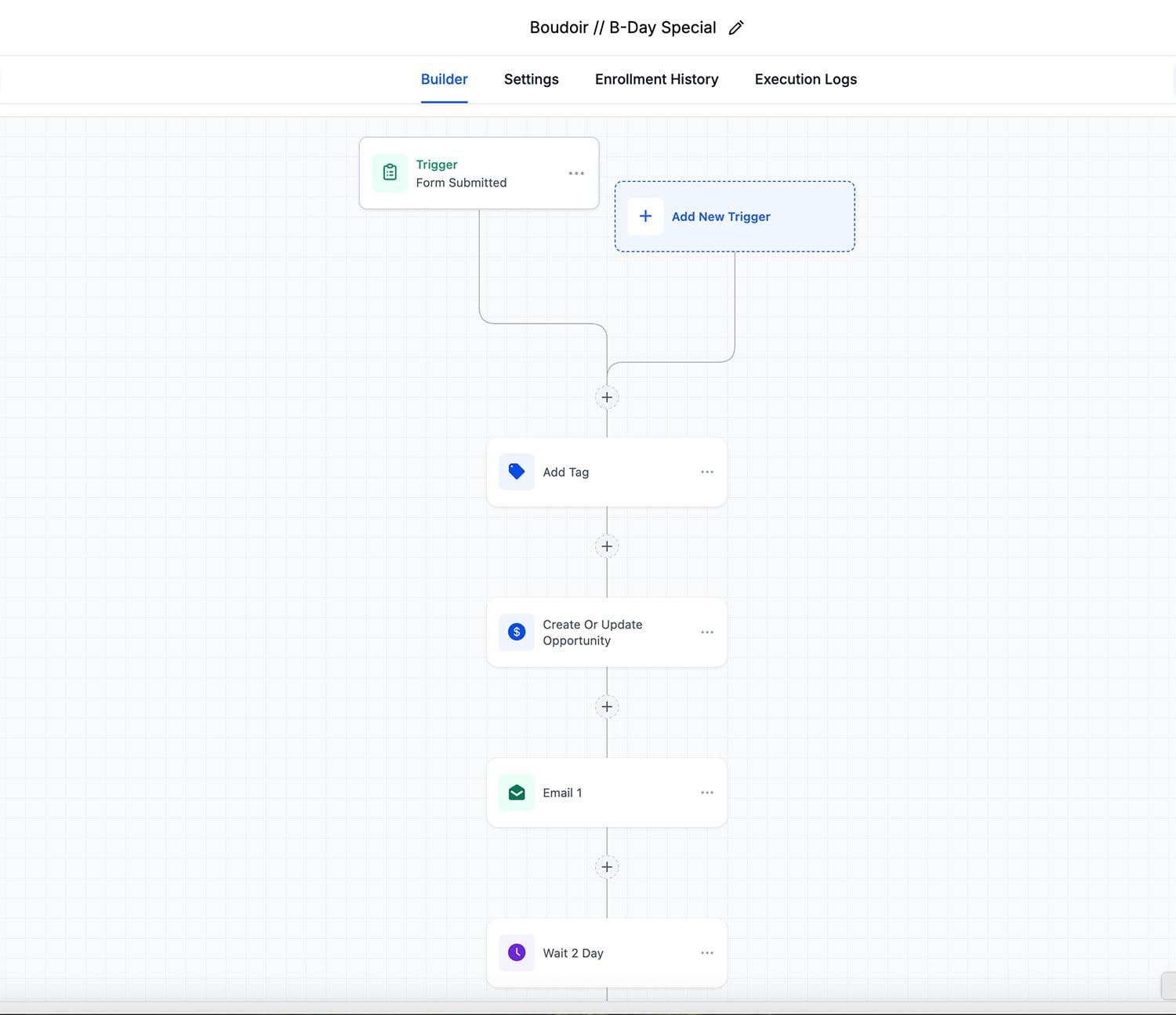
When a lead signs up the worst thing you can do is just go dark. Remember, this is someone who has signed up and expressed interest at some level. So start the conversation with some easy follow-up emails.
First, whatever offer you made, make sure it’s delivered in a confirmation email. This ensures that people are giving you valid user information – or what’s the point? From there, put a sequence of emails together that remind them of your offer or cross promote some other offering you might have. Disruptor Marketing is the perfect platform for building automated workflows like this.
Step 6 – Track and Optimize
Reporting is critical to all marketing efforts. Is it working? We need to start a simple spreadsheet with tracking data on clicks, sign ups, new customers, etc. This will give you all the information you need to ensure that your lead marketing is actually working efficiently. Not to mention, that this helps from a historical perspective if you ever choose to re-activate this lead strategy.
I can tell you how we do it. I like to group information into a few buckets.
- What went right?
- What went wrong?
- What needs to be changed?
This just provides the team a healthy way of evaluating success.
Paid vs Organic Lead Generation
Wouldn’t it be great if all leads were organic and we had no advertising expenses at all? Sure it would. But welcome to reality. We have to pay for attention and isn’t that what this is all about? A modern digital way of yelling “look at me, look at me!!”
Let’s take a look at when each option makes the most sense.
When to Use Paid Ads
When should you use paid ads? Always! You had to know I was going to say that. On a very serious note, you need to understand that marketing should take up 10-15% of revenue. This is a number the Small Business Association provides based on their membership.
I think this is important to understand because I see a lot of photographs misunderstand this and get shocked when they think about spending money on marketing. Back to the point, paid ads are great for expanding your business to a new audience. These are people that might not even be aware of your brand or your offering. So, awareness is a very powerful growth ingredient. Pair awareness with a strong offering – something like a 50% off session fee, or a downloadable pdf with valuable information and you are setting yourself up for growth.
To simplify it, think of paid ads as a growth accelerator when you want to grow fast.
When SEO Makes More Sense
Now, we can’t forget about SEO. And why would we? Search Engine Optimization is free traffic to your site if done right. SEO is typically a long-term play here. Instead of having access to potential customers who might not be aware of our product or services – we now are targeting people who are actively searching for us or our products and services.
Think of SEO as a slow burn and paid ads as high-octane fuel for your business growth strategy. Both have a place in your overall strategy but I wouldn’t rely on any single one for growth.
Why Most Successful Studios Use Both
How Much Should Photographers Spend on Lead Generation?
Let’s kill the vague advice right now. If someone tells you, “It depends,” and leaves it at that, they’re not helping you.
Lead generation isn’t about guessing a budget. It’s about knowing your numbers. If you don’t know what a client is worth to you and what it costs to acquire one, you’re not running marketing — you’re gambling.
Let’s break it down the way business owners actually should.
Cost Per Lead Benchmarks
Here’s what you can realistically expect if your targeting and offer aren’t terrible:
- Wedding photography: $12–$35 per lead
- Senior photography: $6–$18 per lead
- Boudoir photography: $8–$22 per lead
- Headshot photography: $4–$15 per lead
If you’re in a major metro market, expect to land on the higher end. If you’re rural, you’ll likely land lower.
But here’s where most photographers screw this up: They obsess over getting the cheapest lead possible. A $5 lead that never responds is worthless. A $25 lead that books a $2,500 wedding is a gift. Stop chasing cheap. Start chasing qualified.
Cost Per Booking Benchmarks
This is the number that actually matters. Let’s say your average cost per lead is $20. If you close 25% of your leads, that means:
- 4 leads = 1 booking
- $80 to acquire a client
Now compare that to your average sale. If you’re booking:
- $1,500 seniors
- $2,500 weddings
- $1,200 boudoir sessions
Spending $80–$150 to acquire that client isn’t expensive, it’s leverage. The problem isn’t the ad cost. The problem is usually your close rate or your follow-up. Most photographers don’t have a lead problem. They have a sales process problem.
Understanding Client Acquisition Cost
This is where you stop being a hobbyist and start being a business owner. Client Acquisition Cost (CAC) is simple:
Total ad spend ÷ number of bookings.
That’s it.
If you spend $1,000 in a month and book 5 clients, your CAC is $200.
Now ask yourself:
Would you pay $200 all day long to land a $2,000 client?
If the answer is yes, you don’t have a marketing issue, you have a scale opportunity.
If the answer is no, you either:
- Need to raise prices,
- Improve your close rate,
- Or fix your offer
Scaling a Profitable Lead System
Here’s the rule: Scale ads that are predictable. Don’t scale ads that are losing money.
If your cost per lead and close rate are stable, and your acquisition cost is acceptable, then increase your ad budget 20–30% at a time. Not double. Not triple. Incrementally.
Watch:
- Cost per lead
- Cost per booking
- Show rate
- Close rate
If those hold steady, you push more money in. If they spike, then something has broken. Usually, your audience is fatigued or your follow-up is weak.
It’s a simple math problem. And if you don’t know your math, you shouldn’t be scaling anything.
Common Lead Generation Mistakes Photographers Make
- No clear offer
- Sending traffic to homepage
- No follow-up system
- Poor ad targeting
- Relying on organic only
- Ignoring data
Frequently Asked Questions About Lead Generation for Photographers
How do photographers get consistent leads?
Put together an action plan. Consistency is key to getting leads. Consistency in marketing. Consistency in content creation. Work a month out and start laying out ideas and offers. This allows you plenty of time to prepare the content you need to be successful. This is where a lot of photographers fail. They know they need to do it, but fall short of putting an actual plan together.
What is a good cost per lead?
Obviously, it’s going to be different per genre, but here are some guidelines.
Wedding Photography
- $12–$35 per lead
- Competitive metro markets: $25–$45
- Luxury markets: even higher, but lead quality increases
Senior Photography
- $6–$18 per lead
- Seasonal spikes can push this up during peak booking windows
Boudoir Photography
- $8–$22 per lead
- Highly dependent on creative quality
- Conversion rate matters more than CPL
Headshot Photography
- $4–$15 per lead
- B2B campaigns slightly higher
Do I need a landing page?
Absolutely. This is a must have. Sending potential new leads to your main website is a recipe for disaster. Why? Because there are too many ways for them to be distracted. Too many ways for them to click to other pages. A landing page allows you to control the message and stop the user from drifting to other pages on your site and distract them. Your landing page should have no way to navigate away from the page to other parts of your site. Everything they need to make the decision to give you their information should be on the landing page.
How long does it take to see results?
Most of the time, we see results in the first 48-72 hours once our ads go live. However, keep in mind, this is fully dependent on the quality of your offer. A good offer will start converting immediately. If you get 5 days or more in without any leads you might need to revisit your offer and consider altering some of the copy, the imagery, or the offer altogether to make it more compelling.
Is paid advertising necessary?
Short answer, yes. Paid advertising isn’t new. What’s new is how accessible it is to photographers. Think back 20 years ago before digital advertising was a thing. The only options available to you were typically very expensive. TV, direct mail, billboards, etc were tens of thousands of dollars. And measuring results could take months to know if something really worked. Today, digital advertising gives you almost immediate feedback. I would say this is an absolute requirement to grow your business today and get your name in front of potential clients to generate new leads.
Do You Need Help Building a Lead Generation System?
It’s ok to need help. Most businesses have a team of people dedicated to learning best practices and trends to help generate new leads for their business. Good news, we can help too. Disruptor Marketing offers a full range of marketing services at an affordable price. A price that will pay for itself with your first campaign.
We offer a monthly done-for-you program that puts our team of experts to work for you.
Want to learn more? Click here to check out how disruptor marketing can help your photography business grow.

Did this post help you?
If you would like to learn more about the Disruptor platform or working together check out our informational page which breaks down the various levels we offer.